
Jenny is actually not named Jenny at all. A close friend of mine, she has chosen to remain anonymous due to a run in with the police during the protest, which have moved her from the front line of the protest to back-end support, coordinating and had to pay close attention to different situations, outbreaks via social media and live coverage broadcasted by medias big and small.
J = Jenny ME = Andy
ME:
You were very active during the demonstrations, what were your duties like?
J:
When it all started in June I only joined the protests as a regular citizen, unfortunately I was booked by the police not able to leave an area on curfew, causing me to not being able to join that many protests.
As the demonstrations went on, there was a realization of the lack of safety precautions amongst protestors, we started utilizing the more secure communication app : Telegram for trading news, vital information and safety tips, it even later on became a source in collecting donations for funding the proper gear for younger protestors who can’t afford such things.
As a result of the political disputes, some teenagers left their homes over heated arguments and there were those nice enough to offer temporary shelter for these individuals.
ME:
What kind of groups were there, could you name some?
J:
On Facebook, there was one started just for this purpose named PPPN, Tseung Kwan O Beacon (將軍澳 烽火台), Youngspiration (青年新政) etc.
There are 2 kinds of groups/ forums, one is kind is known as “open sea” (公海) where all sources of information are provided by members and the public ; another is the kind when information was released only by the host of the forum.
ME:
Then there’s Telegram, Dropbox and AirDrop, any others?
These methods were improvised by people on LIHK all according to the needs of the situation.
Instagram was not used so much for the nature platform itself is too personally attached.
ME:
Many changes in news reporting : celebrity anchors and live streaming being a couple of them, what are your thoughts?
J:
Live streaming in June 2019 at the beginning of the protests was not as advanced and lagged a lot. As the situation carried on for months to come, the tech started to catch on better. I think that live streaming is healthier or better for HK audiences for viewers are to witness and come to their own conclusions as events unfold in front of their eyes. Yet, relatively new towards such a large scale event the population were really sensitive during that period, which they would have to start learning what has news value and what is worth a thought and to be debated about, opinions were literally flying through the air.
When it comes to online content, the amount of articles made available are to the point of a flood (Jenny being a person to read articles from both ends). Forums are farming not just content but fueling emotions which creates a lot of confusion resulting in big groups of blind followers. The gap between blue and yellow is still widening today due to individuals expressing deep selfish thoughts triggered by emotions. The city is in chaos.
ME:
Do you feel that members of these online communities can be trusted?
J:
I only trust members in familiar groups. There is always the risk of people with a hidden agenda ratting out everyone if we ever get to know each other on a personal level, whole groups of people could get arrested.
Do not trust the internet, only under the right circumstances and with a clear head.
ME:
Now that the demonstrations are being clamped down on to a stop, what are the significant changes that are left from the events of 2019?
J:
More in context than any physical happenings, people are now more conservative and would much rather be on the receiving end and would not expressing much opinion.
For forums and other online sources, pages are more a collective of opinions from the public. Citizens have clearly developed a sense of public awareness, even the greater news media firms are more dependent on online content generated by the public.
ME:
What and how are we to be aware of and improve on?
J:
There are a few things:
-I think people can now start turning off their notifications, especially on Facebook, someone is now shoving content down our throats and that is not a good sign.
-There is too much discussion based on emotions and not enough talk about how to actually solve problems.
-The public eye is ever more sensitive towards the media, the police force and the government.
-Many citizens out of distrust are solving problems by themselves.
-News reports now will always hold a bias whether it is obvious or not, rendering the mainstream media ineffective. People turn to Youtubers and other individual platforms as such and are too heavily relying on these hosts to do their thinking for them.
Ever since the handover of 1997, there have been problems that need answering, such as : The definition of 1 country 2 systems? Where do our core values lie? Debates and discussions about how and who should govern Hong Kong.
Reflection
This is one interesting interview compared to all the previous interviewees who were involved in the news industry themselves. Jenny was a user and not just an ordinary person sitting on their couch observing the news, Jenny at one point was putting the information she recieved from network television, social media and forums in to use in a way which could affect the safety of protestors that relied on her for vital updates and guidence.
Jenny as someone who is younger than I am, made me feel a little off beat with what is going on with Hong Kong society today. She is a person who would jump on the latest app, read what is going on in forums big and small and has a good view in what the population is thinking about.
Reflection On the Political Environment
The winds of the protest or any kind of “resistence” has died down due to the strong hand the government has put on to assure national security.
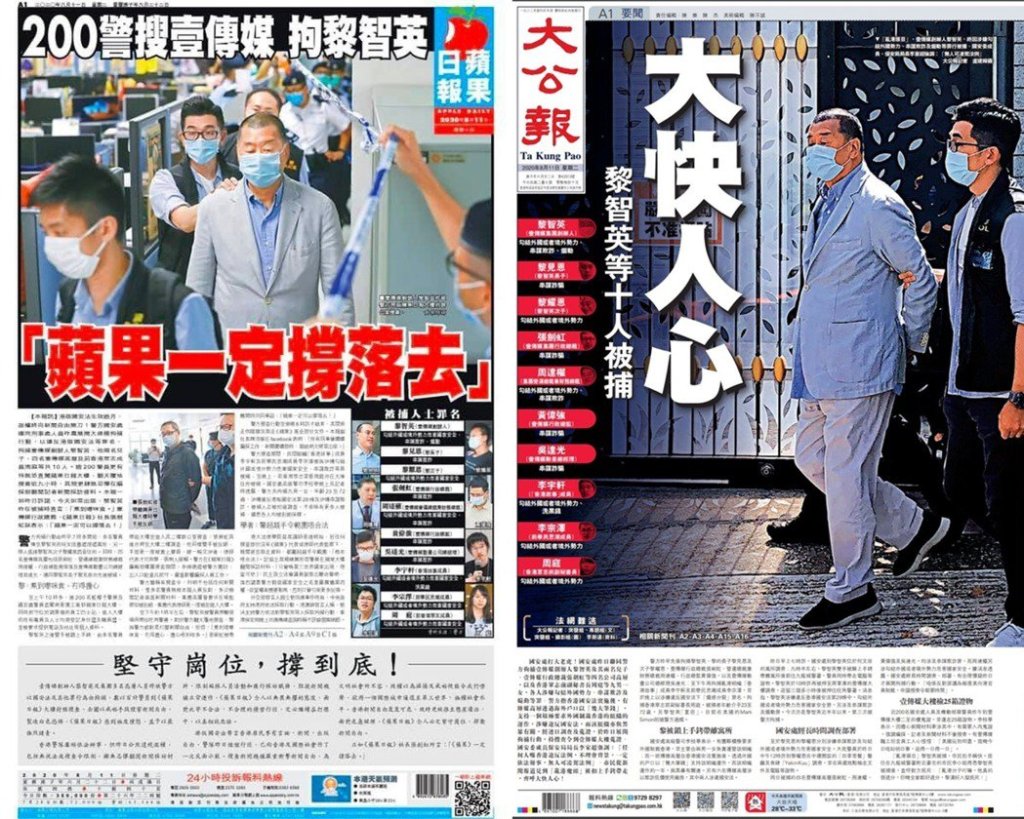
The environment now does not allow any outspokeness in relations to the protest, even writen material is to be distributed with extra caution. I would like to take the time here to just express that the project to this point is in it’s nature documenting what has happened, how electronic media has changed due to the events of 2019. In my opinion, the protests were over done and there is a strong belief that foreign powers were at play in fanning the flame in esculating the anger of protestors in to (I would have to admit) an angry mob. No matter what caused it and how it ended, the people of HK needs to now settle down and think past all the turmoil.
In my opinion, it is important to accept the fact that the handover has happened and that Hong Kong is experiencing a shift in power that might not fit well with part of the population. Staying safe to see another day is one thing, and now the most vital is that HK’s core values (as mentioned by Jenny) needs to be realised. Culture is one thing that laws does not have a steady hand on and that there is a safe way in experessing our opinions, preserve our unique history and identity, but most of all is to look forward and figure out the steps ahead of us as Hong Kong people, how are we to make a mark on the Chinese map? The globe? What was and will be our advantages?
ANDY WAS HERE
 ANDY was here 🤓